Symptoms include stunted growth, leaf rolling, yellowing, reduced tillers, and smaller ears. These often appear in patches, indicating uneven salt distribution.
Corn thrives in loamy soils with good drainage and aeration, but with precise irrigation management, it can also grow well in more challenging soils.
Yes. By maintaining a consistent wetting pattern and enabling leaching below the root zone, drip systems help manage salt accumulation and support corn’s moderate salt tolerance.
Corn requires between 450–700mm of water during its growing season. Optimal water delivery timing is critical to avoiding stress and yield loss.
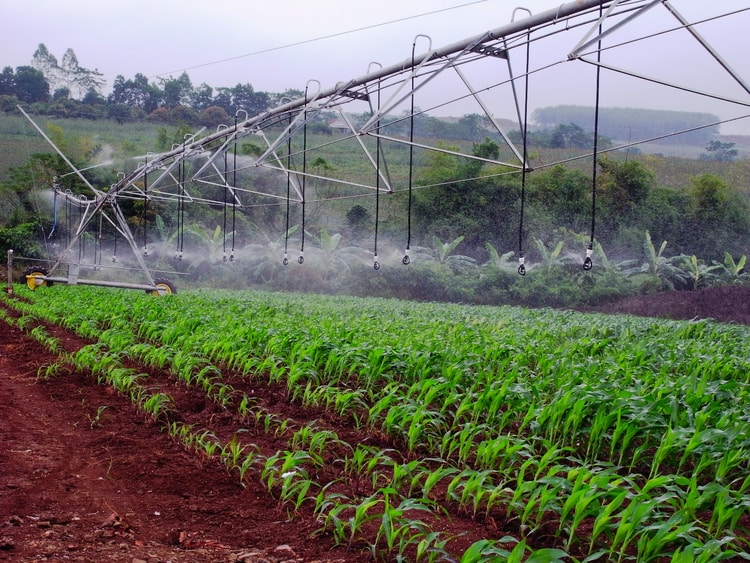
Metzer provides various solutions for corn irrigation; starting with thin-wall driplines for seasonal use, pressure compensated driplines with RootGuard® protection against root intrusion for subsurface (SDI) multi-season use, and up to Centre Pivots and Reel Hose systems for large scale fields.
Metzer’s drip and SDI systems ensure efficient water and fertilizer delivery directly to the root zone, reducing evaporation, improving uniformity, and increasing yields even in challenging conditions.
Corn requires high and consistent moisture, especially during tasseling and grain-filling stages. Any water deficit during these phases can drastically reduce kernel formation and final yield.