Drip irrigation is widely considered the most efficient irrigation method in modern agriculture—but it is not a universal solution.
At commercial scale, drip irrigation is not just equipment—it is a precision farming system involving filtration, pressure regulation, fertigation, and carefully engineered drip lines.
When implemented correctly, it can dramatically improve water efficiency, crop yield, and input control. When mismanaged, it can quickly become an expensive network of clogged lines and uneven results.
This guide breaks down the real advantages, disadvantages, ROI factors, and hidden risks—so you can make an informed decision.
What Is Drip Irrigation? (And Why It’s Different)
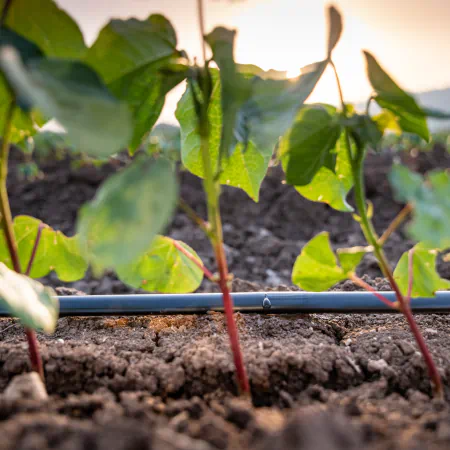
Drip irrigation is a micro-irrigation system that delivers water directly to the plant root zone through a network of pipes, valves, and emitters.
Unlike sprinkler or flood irrigation, which distribute water broadly, drip irrigation applies small, precise amounts exactly where needed.
At agricultural scale, a complete system includes:
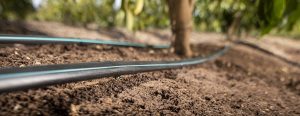
- Drip lines or drip tape (surface or subsurface)
- Pressure-regulated emitters (PC/non-PC)
- Filtration systems (to prevent clogging)
- Pumps, valves, and control units
- Fertigation systems for nutrient delivery
This level of control allows for uniform water distribution across varying soils, slopes, and crops, making drip irrigation a cornerstone of modern precision agriculture.
Advantages of Drip Irrigation
- Exceptional Water Efficiency (Up to 90–95%)
Drip irrigation delivers water directly to the root zone, minimizing:
- Evaporation losses
- Surface runoff
- Deep percolation
In well-designed systems, water-use efficiency can reach 90–95%, making it one of the most efficient irrigation methods available.
In water-scarce regions, this is often the primary driver of adoption.
- Precision Fertigation and Nutrient Efficiency
Drip irrigation enables fertigation—the injection of fertilizers directly into the irrigation stream.
This allows:
- Precise nutrient timing
- Controlled dosing
- Improved nutrient uptake
The result is lower fertilizer waste and better crop response, especially in high-value crops.
- Higher Yield, Quality, and Market Uniformity
By maintaining stable soil moisture:
- Plants avoid stress cycles
- Growth becomes more consistent
- Crop uniformity improves
In commercial agriculture, uniformity directly impacts market price, grading, and profitability.
Yield increases of 10–30% are common in optimized systems.
- Lower Energy Requirements (Low-Pressure Operation)
Drip systems operate at significantly lower pressure than sprinklers.
This results in:
- Reduced pumping requirements
- Lower energy costs
- Improved long-term operational efficiency
At scale, this can translate into substantial cost savings.
- Strong Performance in Challenging Conditions
Drip irrigation is highly adaptable to:
- Sloped or uneven terrain
- Sandy or highly permeable soils
- Irregular field layouts
Pressure-compensating driplines ensure uniform flow even under variable topography, where sprinkler systems struggle.
- Reduced Weed Growth and Disease Pressure
Because water is applied only at the root zone:
- Soil between rows remains dry, reducing weed growth
- Plant foliage stays dry, lowering fungal disease risk
This reduces dependency on herbicides and plant protection treatments.
- Enables Advanced Irrigation Strategies (SDI and Water Reuse)
Modern systems such as Subsurface Drip Irrigation (SDI):
- Further reduce evaporation
- Improve root-zone efficiency
- Enable safe use of treated wastewater
These systems are increasingly used in large-scale agriculture facing water constraints.
Disadvantages of Drip Irrigation
- High Initial Investment (Capital Expenditure)
Drip irrigation requires significant upfront investment in:
- Drip lines and emitters
- Filtration and fertigation systems
- Pumps, valves, and automation
- System design and installation
For large farms, this can represent a major financial barrier.
- Clogging Risk (The Critical Weak Point)
Drip emitters are highly sensitive to blockage from:
- Sediment
- Mineral precipitation (calcium, iron)
- Organic matter and biofilm
Even partial clogging reduces irrigation uniformity, which directly impacts crop performance.
Proper filtration and water quality management are essential.
- Maintenance Is Continuous
Drip irrigation is not a passive system.
It requires:
- Regular filter cleaning
- Line flushing (chemical or hydraulic)
- Monitoring of pressure and flow
Most system failures are not technical—they are operational.
- Design Sensitivity
System performance depends heavily on:
- Hydraulic design
- Emitter spacing
- Pressure regulation
A poorly designed system can lead to uneven irrigation, reduced yield, and inefficient water use.
- Ongoing Replacement Cycles
Drip components are not permanent:
- Surface lines degrade from UV exposure, machinery, and rodents
- Subsurface systems face root intrusion and soil pressure
Drip irrigation should be treated as a recurring infrastructure cost, not a one-time investment.
- Salinity and Soil Management Challenges
Localized irrigation can cause salt accumulation at the edges of the wetted zone.
Without proper management, this can:
- Reduce plant performance
- Affect long-term soil health
Hidden Disadvantages Most Articles Ignore
- Undetected Leaks (Especially in Subsurface Systems)
Leaks in drip systems can remain unnoticed for long periods, particularly in subsurface installations.
This can lead to:
- Water loss
- Nutrient imbalance
- Yield reduction
- System Dependency (Power and Control)
Modern drip systems rely on:
- Pumps
- Controllers
- Stable pressure
Power outages or system failures can disrupt irrigation during critical periods.
- Root Zone Behavior Changes
Because water is concentrated:
- Roots develop in smaller wetted zones
- Some crops may become more sensitive to stress or wind
- Environmental Impact (Plastic Use)
Drip lines, especially seasonal drip tape, require periodic replacement.
This creates:
- Ongoing material costs
- Agricultural plastic waste challenges
Drip Irrigation ROI: Is It Worth the Investment?
Drip irrigation is not just a cost—it is a performance investment.
It delivers strong returns when:
- Water savings are significant
- Crop value is high
- Yield improvements offset capital cost
- Fertilizer efficiency reduces input expenses
It becomes risky when:
- Maintenance is inconsistent
- Water quality is poor
- System design is inadequate
Profitability depends more on management than on the technology itself.
Drip Irrigation vs Sprinkler Systems
| Factor | Drip Irrigation | Sprinkler Irrigation |
| Water efficiency | Very high | Medium |
| Energy use | Low | Medium–high |
| Installation cost | High | Medium |
| Maintenance | High | Medium |
| Precision | Very high | Low–medium |
| Reliability (low management) | Medium | High |
When Is Drip Irrigation the Best Choice?
Drip irrigation is ideal when:
- Water is scarce or expensive
- Crops are high-value
- Precision agriculture is required
- Terrain is complex or irregular
When It May Not Be the Right Solution
It may not be suitable when:
- Budget is limited
- Water quality is poor
- Maintenance capacity is low
- Crop margins are minimal
Final Verdict
Drip irrigation is one of the most powerful irrigation systems available, but also one of the most management-intensive.
It delivers maximum efficiency, precision, and yield potential, but requires capital, technical expertise, and ongoing maintenance.
Key Takeaway
Drip irrigation is not just an irrigation method—it is a precision management system.
When designed and managed correctly, it can significantly increase efficiency and profitability.
When poorly implemented, it can become costly and unreliable.