Drip irrigation is one of the most accurate and efficient irrigation technologies, delivering water according to plant demand with high uniformity. But even a well-designed system requires continuous monitoring and maintenance to perform reliably over time.
Proper drip irrigation maintenance helps prevent dripper clogging, pressure loss, uneven irrigation, pipe damage and system downtime. According to Metzer’s drip system maintenance guidelines, long-term performance depends on three main factors: correct installation, continuous water quality control and a consistent maintenance program.
This guide explains the key maintenance practices required to keep a drip irrigation system operating efficiently throughout the irrigation season and over many years of use.
What Is Drip Irrigation Maintenance?
Drip irrigation maintenance is the routine inspection, cleaning, monitoring and treatment of a drip system to prevent clogging, maintain pressure and flow, and protect system components.
A complete maintenance program should include:
- Water quality analysis
- Regular inspection of pumps, filters, pipes, valves and driplines
- Monitoring of system pressure and flow rate
- Filter cleaning and backflushing
- Flushing of mainlines, sub-mains and laterals
- Chemical treatment when needed
- Seasonal startup and shutdown procedures
- Documentation of pressure and flow measurements
Metzer’s guide emphasizes that maintenance is not optional. It is essential for preventing technical failure and preserving system performance over time.
Why Water Quality Is the Foundation of Drip System Maintenance
Water quality is one of the main factors affecting filter and dripper blockage. Irrigation water may come from boreholes, surface water, saline water, treated wastewater or effluent water. Each source can carry different levels of suspended particles, dissolved minerals and biological matter.
For any new water source, Metzer recommends conducting a water quality analysis to identify elements that may harm the drip irrigation system or the crop.
The analysis should include parameters such as:
- pH
- EC
- TSS
- calcium
- magnesium
- iron
- manganese
- carbonate
- bicarbonate
- sodium
- chloride
- sulphate
- nitrate
- ammonium
- phosphate
- boron
- potassium
The maintenance strategy should be adjusted according to the water source and clogging risk. Poor water quality usually requires more frequent filtration, flushing and chemical treatment.
The Three Main Causes of Dripper Clogging
-
The Three Main Causes of Dripper Clogging
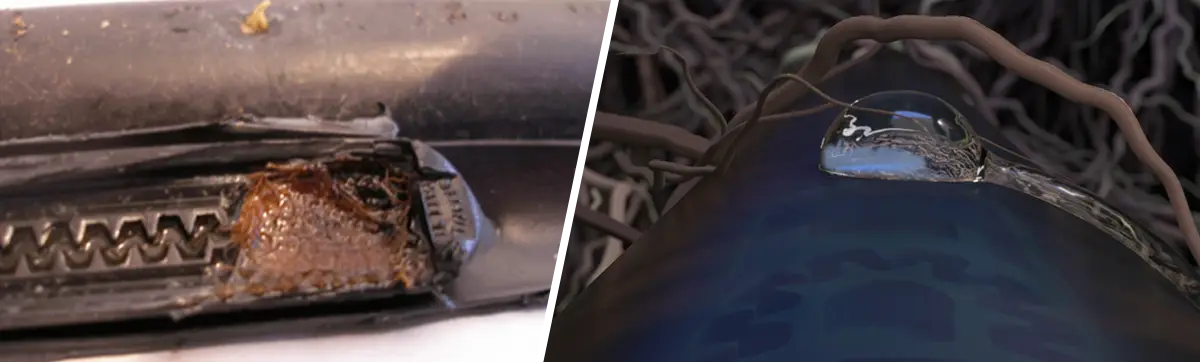
Metzer divides drip system clogging into three main groups: physical, chemical and biological.
-
Physical Clogging
Physical clogging is caused by suspended particles that enter the irrigation system from the water source. These may include sand, mud, clay, algae, zooplankton and other organic or inorganic particles.
To reduce physical clogging, the system should include proper water intake planning, sand removal where needed, suitable filtration and regular flushing.
-
Chemical Clogging
Chemical clogging occurs when dissolved substances in the water precipitate or crystallize inside the irrigation system. Common causes include calcium carbonate scale, iron, manganese and fertilizer reactions.
Chemical clogging can often be reduced by water treatment, pH control and, when necessary, acid treatment.
-
Biological Clogging
Biological clogging is caused by organisms that develop as biofilm inside pipelines, equipment and drippers. These may include microbes, protozoa and other organisms.
Metzer recommends disinfection with chlorine or hydrogen peroxide to prevent or reduce biological clogging, depending on system conditions and water quality.
-
Essential Components to Inspect in a Drip Irrigation System
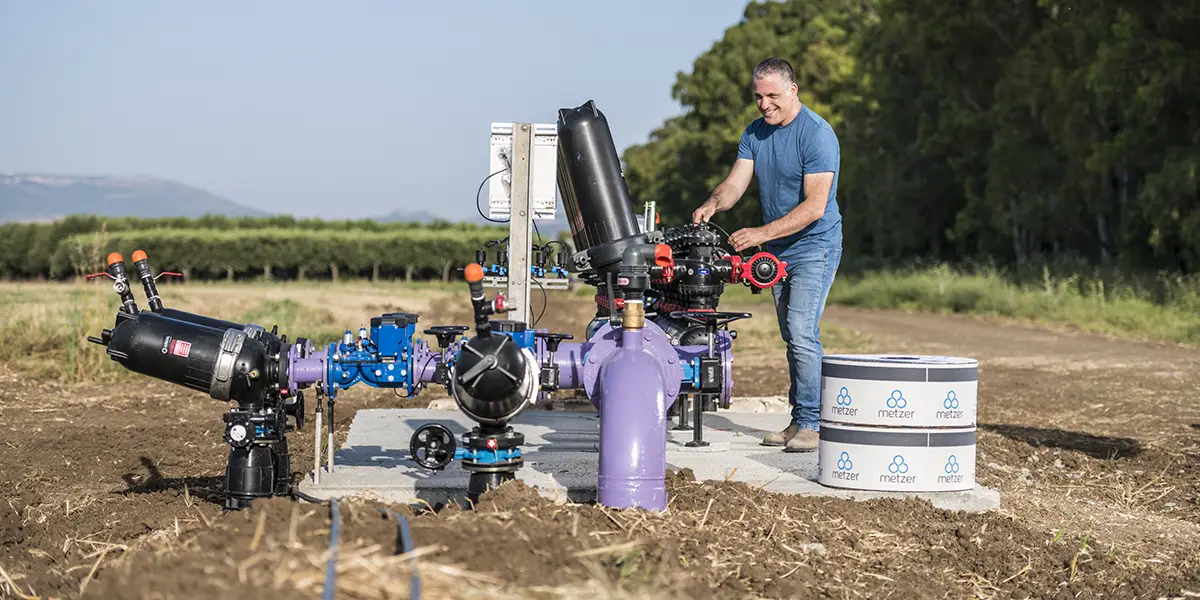
A drip irrigation system should be maintained as a complete system, not only as a set of driplines. Metzer’s guide lists key system components and explains their maintenance role.
Important components include:
- Pump: Supplies the required flow rate and pressure.
- Main filter: Removes particles that may clog drippers.
- Fertigation unit: Injects fertilizers into the irrigation water.
- Chemical injection unit: Injects acid, chlorine or peroxide when required.
- Main pipeline: Delivers water from the pump station to the field.
- PRV and air release valves: Help control pressure and reduce water hammer risk.
- Sub-main and distribution pipes: Deliver water to field blocks and laterals.
- Field or backup filters: Provide secondary protection near irrigation blocks.
- Driplines: Deliver water to the crop through drippers.
- Lateral ends: Enable flushing of sediments from the driplines.
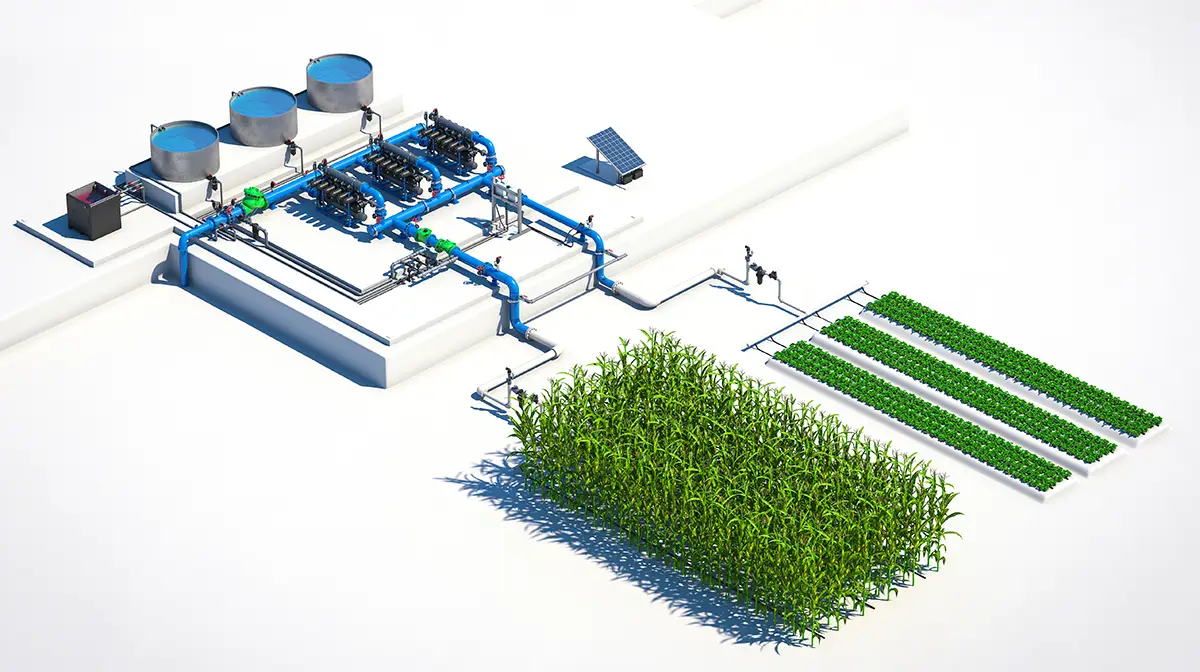 Each component should be checked according to its function in the system.
Monitoring Pressure and Flow Rate
Pressure and flow monitoring are among the most important maintenance activities in drip irrigation.
Metzer states that the best indication of proper operation is whether the system is working within the pressure limits specified in the product’s technical documents. Pressure should be checked at the ends of laterals and sub-mains, and both minimum and maximum recommended pressures must be followed.
Flow rate should also be measured and compared with the designed system flow rate.
A change in flow can indicate a system fault:
| Observation | Possible Meaning |
| Flow rate increase | Pipe burst or leakage |
| Flow rate decrease | Valve issue, filter blockage or dripper blockage |
| Low pressure in sub-main | Blocked field filters, pump problems, too many valves open or design issue |
| Pressure drop above expected level | Possible pipe burst, filter blockage or valve failure |
At the first system operation, Metzer recommends measuring the actual flow rate and working pressure for each irrigation shift after the system has operated for at least 30 minutes. These results should be documented as a baseline for future comparisons.
If flow rate or pressure measurements differ from the design parameters by more than 5%, the system installer or supplier should be consulted.
Filtration and Filter Maintenance
Filtration protects the drippers from particles that can block water passages. According to Metzer’s guide, drip irrigation systems generally use filtration rates of 130 micron / 120 mesh for most drippers and 100 micron / 140 mesh for drippers with a flow rate below 0.9 l/h. The exact filtration level depends on water quality, dripper type and application.
The three main filtration methods are:
- Media filtration
- Disc filtration
- Screen filtration
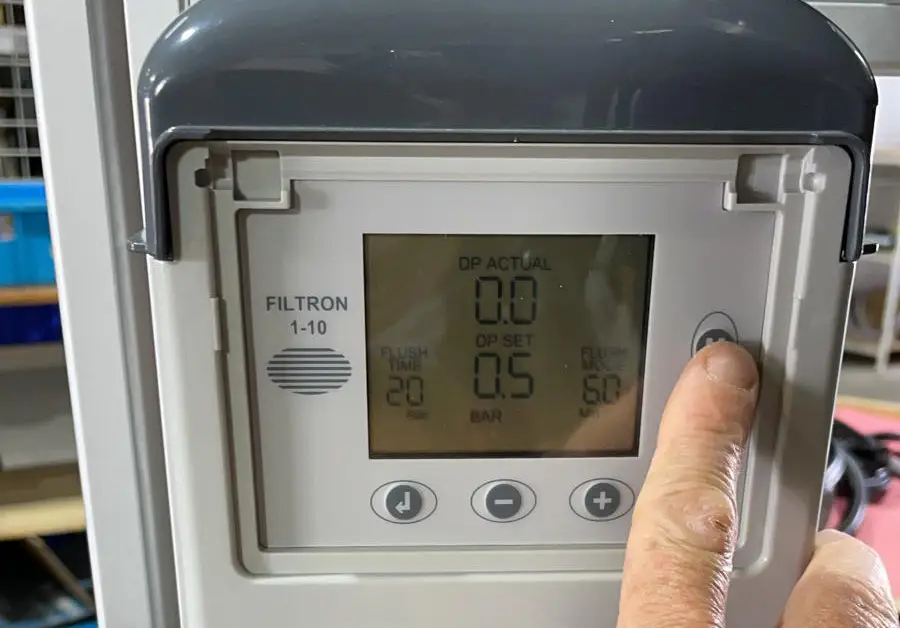
Metzer highly recommends automatic main filtration systems, with automatic washing and cleaning controlled by a designated controller. Filter cleaning is commonly activated by differential pressure, usually around 0.5 bar / 7 PSI, or by set time intervals.
Routine pressure difference during normal operation should generally be in the range of 3 to 7 meters. If filters require cleaning too often or continuously, this may indicate excessive flow, high dirt load or another system problem.
Maintenance of Media, Disc and Screen Filters
Media Filters
At the beginning and end of each irrigation season, the system should be depressurized and drained before inspection. The media level should be checked, contaminants should be identified, and the media should be inspected to confirm it is loose, clean and not stuck in blocks.
Manual and automatic flushing cycles should be tested, and the flushing control system should be checked for proper operation.
Disc Filters
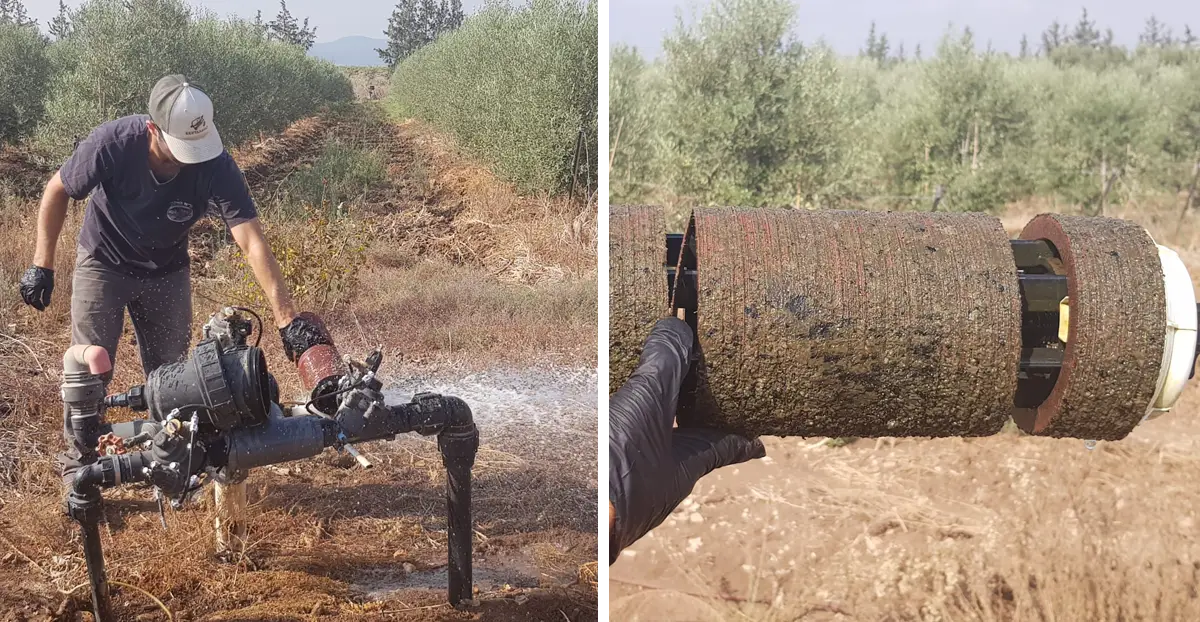
Disc filters should be opened and inspected after pressure is released from the system. The discs should be checked for organic or inorganic sediment, deformation, gaps or accumulated material.
If automatic cleaning does not remove dirt from the discs, manual cleaning should be performed according to the manufacturer’s instructions.
Screen Filters
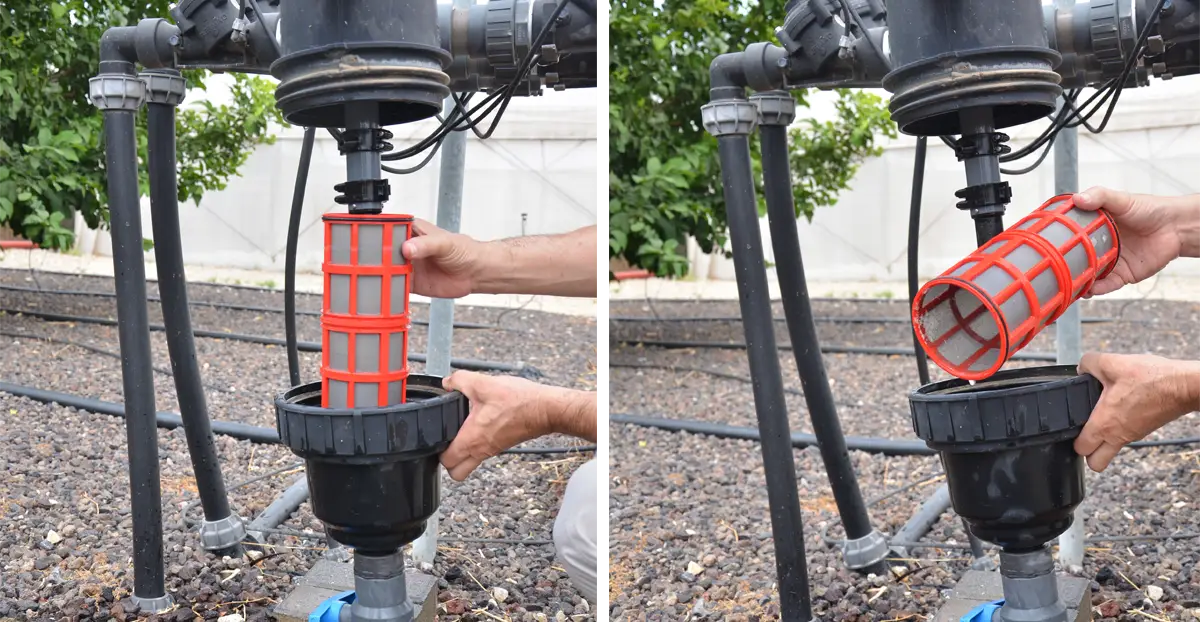
Screen filters should be opened only after pressure is released. The screen and suction nozzle assembly should be removed and inspected. The screen should be intact, without holes or tears, and the suction nozzles should be checked for wear or damage.
Secondary Field Filters
Field filters, also known as secondary or backup filters, are installed near irrigation blocks as a safety measure. Their role is to protect the drippers from main filtration failure or downstream dirt intrusion.
Metzer recommends cleaning field filters after every irrigation cycle. Poor maintenance of these filters can cause pressure and flow loss in sub-mains and driplines, leading to dripper blockage.
Flushing Mainlines, Sub-Mains and Laterals
Flushing is one of the most important routine maintenance procedures in a drip irrigation system.
Metzer recommends flushing laterals at the beginning and end of every irrigation season and during the season according to water quality and dirt accumulation at the lateral ends.
Recommended flushing velocities are:
| System Section | Recommended Flushing Velocity |
| Main pipeline | More than 1.0 m/sec |
| Sub-main | More than 1.0 m/sec |
| Laterals | More than 0.5 m/sec |
For efficient lateral flushing, Metzer recommends applying the highest possible pressure allowed by the dripline pressure rating and opening lateral ends in small groups, not all at once.
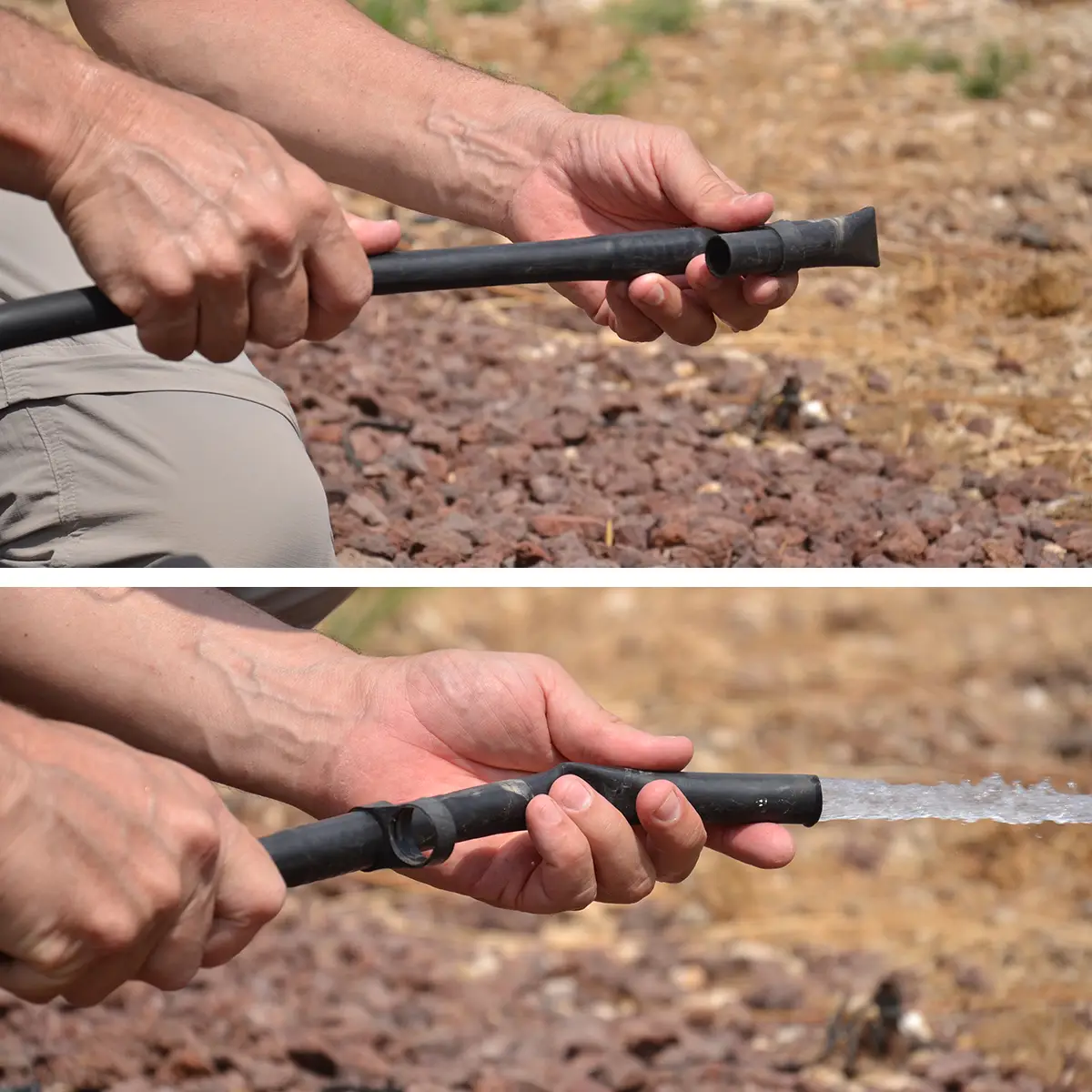
Each lateral should be flushed until the water exiting the lateral end is clear, or at least the same color and turbidity as the water entering the system head control.
Chemical Treatment for Drip Irrigation Maintenance
Chemical treatment is used to prevent or correct dripper clogging caused by biological slime, mineral deposits or chemical precipitation.
Metzer’s guide describes two main treatment categories:
- Oxidant treatment, such as chlorine or hydrogen peroxide
- Acid treatment
Prevention is preferable to cure. Preventive treatment keeps the system cleaner, saves chemicals, reduces environmental impact and is more cost-effective than treating a blocked system after performance has already declined.
Chlorination and Hydrogen Peroxide Treatment
Chlorine is used to prevent bacterial and organic biofilm development. It can also oxidize reduced elements such as iron, manganese and sulphide.
Metzer describes three chlorination methods:
- Continuous chlorination
Low-concentration chlorination throughout irrigation. - Intermittent chlorination
Chlorination for several hours every week or according to water quality. - Curing or system-cleaning chlorination
High-concentration treatment used to clean a blocked drip irrigation system.
Metzer identifies intermittent chlorination as the most recommended method for keeping the irrigation system free of organic contaminants while avoiding overuse of chlorine.
For intermittent chlorination, the guide notes that 5–10 ppm is a common chlorine concentration, with a recommended treatment duration of 2–4 hours per cycle. The injection rate should be adjusted so that active chlorine reaches the most remote drippers in the field.
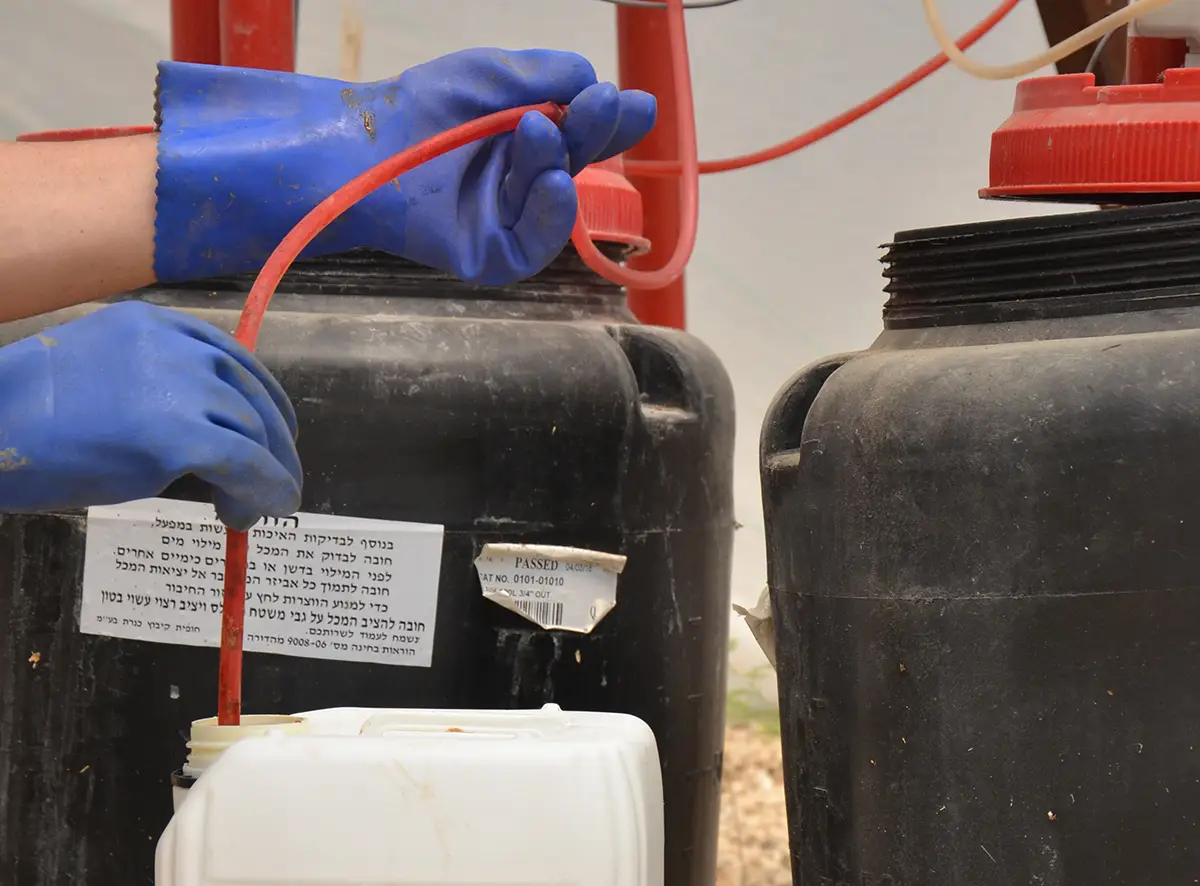
Safety note: Chlorine is dangerous. It must never be mixed or stored with fertilizers or acids.
Hydrogen peroxide can also be used as an oxidant. Metzer notes that hydrogen peroxide treatment follows similar principles to chlorination, but the recommended concentration is generally 3–5 times higher because hydrogen peroxide reacts rapidly and has a short retention time in water.
Acid Treatment
Acid treatment is used to clean mineral deposits from pipes and drippers. These deposits may come from natural precipitation in the water or from incompatible chemicals or fertilizers.
According to Metzer, acid treatment can help dissolve:
- Calcium or magnesium carbonate precipitates
- Iron deposits
- Manganese deposits
The guide describes three types of acid treatment:
Continuous Acid Treatment
Used to reduce water pH below the saturation concentration of calcium carbonate. A pH level of around 5.5–6.5 is usually sufficient to prevent carbonate precipitation.
Intermittent Acid Treatment
Used to dissolve and remove new carbonate and iron precipitates from drippers and laterals. The pH is reduced to 3–4 for approximately two hours, with frequency ranging from weekly to once every three months.
Curing Acid Treatment
Used when drippers are already blocked by carbonates, iron or manganese. The pH is reduced to 2–3 for 0.5–2 hours, and acidic water remains in the driplines overnight. The following morning, the driplines are flushed.
Safety note: Acids are dangerous, toxic and corrosive. Proper protective clothing, breathing equipment and goggles should be used, and manufacturer instructions must be followed.
Pump Inspection and System Checks
Pump inspection should be part of routine drip irrigation maintenance. Metzer recommends checking the pump environment, inlet device, electrical supply, pressure, flow rate and operating sound.
Important pump inspection tasks include:
- Check for leaks at inlet and outlet points.
- Look for corrosion around the pump base and structural elements.
- Keep the pump area clean and free of unnecessary objects.
- Make sure the pump inlet is clear of blockage-causing objects.
- Confirm that electrical components are isolated and protected from moisture, animals and pests.
- Listen for unusual sounds, hissing or irregular vibration.
- Confirm that pressure and flow rate match technical requirements.
Seasonal Drip Irrigation Maintenance Schedule
First System Operation
When commissioning the system or operating it for the first time:
- Flush all main pipelines, sub-mains and delivery pipes.
- Flush drip laterals in groups, not all together.
- Measure flow rate and working pressure for each irrigation shift.
- Compare measurements with system design.
- Document results as a baseline.
- Consult the installer or supplier if pressure or flow differs by more than 5%.
Weekly, Monthly or As-Needed Checks
During the irrigation season:
- Measure flow and pressure for each irrigation shift.
- Compare results to the first-operation baseline.
- Check that water is clean.
- Check pressure at the ends of laterals.
- Check pressure difference at the head control.
- Investigate significant pressure drops or flow changes.
Once Per Season or As Needed
Depending on system performance:
- Flush mainlines and sub-mains.
- Flush dripper laterals.
- Check manual and hydraulic valves.
- Increase inspection frequency if system performance indicates risk.
End of Season
At the end of the irrigation season:
- Flush all pipes.
- Drain water in areas where temperatures may drop below 0°C.
- Inject chemicals where needed and flush laterals.
- Prepare the system for the inactive period.
What to Do if the Drip System Is Inactive for 60 Days or More
If the drip system is shut down for 60 days or longer, Metzer recommends a dedicated inactivity procedure.
The procedure includes:
- Run chemical injection.
- Flush all main pipes, sub-mains and dripline laterals.
- Prepare the pump and disconnect electricity.
- In some cases, remove the pump from the site.
- Run filter cleaning or backflushing.
In frozen climates, drain water from the pump, pipes and accessories.
Drip Irrigation Maintenance Checklist
Use this checklist as a practical summary for field teams:
- Analyze water quality for new water sources.
- Check system pressure and flow rate regularly.
- Compare field measurements to design values.
- Inspect pumps, filters, valves, pipes and driplines.
- Clean field filters after every irrigation cycle.
- Monitor pressure difference across filters.
- Flush mainlines and sub-mains at least at the beginning and end of the season.
- Flush laterals regularly according to water quality and sediment accumulation.
- Use chemical treatment only according to water quality, system condition and safety instructions.
- Document all pressure, flow, flushing and treatment activities.
- Prepare the system correctly before long inactive periods.