For commercial growers, water is one of the most valuable production inputs—and one of the easiest to mismanage.
The risks of drought are obvious. The consequences of applying too much water are often less visible, developing below the soil surface long before crop damage becomes clear. Over-irrigation can reduce root-zone oxygen, carry nutrients beyond the crop’s reach, increase pumping costs and create conditions that favor disease.
The solution is not simply to irrigate less. It is to apply the right amount of water, at the right time and at a rate the soil or growing substrate can absorb. That requires an understanding of crop demand, root depth, soil conditions, weather and irrigation-system performance.
What Is Over-Irrigation?
Over-irrigation occurs when water is applied more frequently, in greater quantities or faster than the crop can use and the soil can absorb, store or drain.
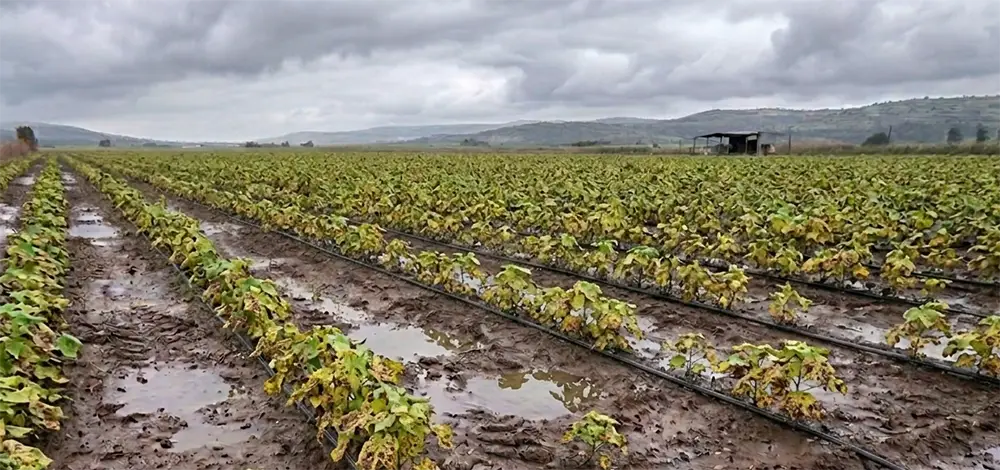
It may result from one excessively long irrigation cycle or from a schedule that repeatedly replaces more water than the crop has consumed. In well-drained soil, the excess may move below the active root zone without producing visible standing water. In poorly drained soil, it may remain around the roots and cause waterlogging.
Soil functions as a reservoir with a limited storage capacity. Effective irrigation scheduling replenishes the usable water within the crop’s root zone without repeatedly exceeding that capacity.
What Causes Over-Irrigation?
Over-irrigation is rarely caused by water alone. It usually results from a mismatch between the irrigation program and actual field conditions.
Common causes include:
- Fixed irrigation schedules: Applying the same volume every day or week without adjusting for rainfall, temperature, wind or crop development.
- Incorrect irrigation duration: Operating the system longer than necessary, even when the emitter flow rate is appropriate.
- Excessive emitter flow: Applying water faster than the soil can absorb it or faster than a growing substrate can drain.
- Poor pressure control: Pressure differences may cause some parts of a field to receive more water than others.
- Incorrect dripper spacing or lateral design: Overlapping wetting patterns or uneven distribution may create saturated areas.
- Compacted soil: Reduced pore space can limit infiltration, aeration and drainage.
- Poor field drainage: Water remains within the root zone because it cannot move through or away from the soil profile.
- Leaks or controller faults: Damaged pipes, open valves and programming errors may apply water outside the intended schedule.
- Lack of moisture monitoring: Crop appearance alone is not a reliable indicator of root-zone water status.
- Failure to adjust for crop stage: A young crop with a limited root system generally uses less water than a mature crop with a developed canopy.
A sound irrigation program should respond to crop growth, soil-water conditions and atmospheric demand. These factors change throughout the season, which is why irrigation schedules must be reviewed rather than left on autopilot.
Signs You Are Over-Irrigating Your Crops
The symptoms of over-irrigation can resemble drought stress, nutrient deficiency or disease. Before increasing irrigation in response to wilted or yellowing plants, growers should check moisture conditions within the active root zone.
Possible signs include:
- Wilting while the soil remains wet
- Yellow, pale or unusually soft leaves
- Slow or stunted growth
- Standing water or persistent ponding
- Runoff during or after irrigation
- Soil that remains saturated long after an irrigation cycle
- Brown, soft or damaged roots
- Increased root-disease symptoms
- Algae or moss on continually wet surfaces
- Excessive weed growth in moist areas
- Uneven crop development across irrigation zones
- Surface salt deposits where salinity, evaporation and poor drainage are also present
Wilting does not always mean that a plant needs more water. Roots in saturated soil may be unable to absorb water and nutrients effectively because oxygen availability has declined. Moisture should therefore be checked at several depths—not only at the soil surface.
How Does Over-Irrigation Damage Soil and Crops?
Waterlogging and Root-Zone Oxygen Loss
Healthy roots need both water and oxygen.
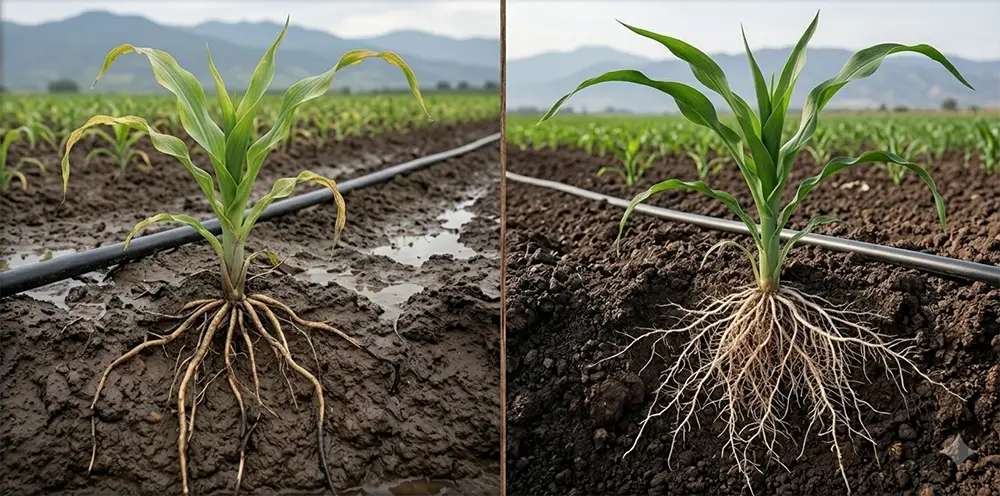
When soil pores remain filled with water, gas exchange slows and oxygen levels within the root zone decline. This reduces root respiration and impairs the processes that support water absorption, nutrient uptake and healthy growth.
The severity of the damage depends on the crop, soil texture, temperature, growth stage, drainage and the length of time the root zone remains saturated. Repeated waterlogging can weaken the root system even when the crop initially appears healthy.
Avocados illustrate the importance of maintaining the correct balance. The crop is highly sensitive to root-zone conditions and requires precise management of water, nutrients and air. Prolonged saturation can weaken roots and increase the risk of root decline and rot.
Nutrient Leaching and Fertilizer Loss
Water that moves below the effective root zone may carry dissolved nutrients with it.
Nitrogen is a major concern because it is highly mobile, although other water-soluble nutrients can also be lost. Once nutrients move below the active roots, they are no longer available to support crop growth.
The consequences include:
- Lower fertilizer-use efficiency
- Nutrient deficiencies
- Uneven crop development
- Additional fertilizer requirements
- Increased production costs
- Greater risk of groundwater contamination
Over-irrigation therefore wastes more than water. It can also waste fertilizer, energy, labor and time. Proper irrigation scheduling helps reduce nitrate leaching while improving the efficiency of production inputs.
How Over-Irrigation Can Lead to Salinization and Land Degradation
Over-irrigation does not cause salinization under every condition. Where drainage is effective, additional water may move salts downward through the soil profile.
The risk becomes more serious when excessive irrigation is combined with poor drainage, a shallow saline water table, saline irrigation water or high evaporation.
In vulnerable fields, surplus irrigation can contribute to a rising water table. Dissolved salts may then move upward toward the root zone through capillary action. When the water is used by the crop or evaporates, the salts remain and become more concentrated.
Excess sodium can also weaken soil structure and reduce permeability, while chloride and other salts may injure sensitive crops. Over time, waterlogging, poor infiltration, salinity and erosion can reduce the productive capacity of agricultural land. USDA guidance identifies inefficient irrigation and inadequate drainage as important contributors to local and regional salinity problems.
Citrus provides a useful example. Citrus trees are sensitive to water stress, salinity and root-zone conditions. Effective orchard management must therefore consider not only irrigation volume, but also water quality, drainage and the uniformity of water delivery.
It is also important to distinguish uncontrolled over-irrigation from a calculated leaching requirement. When saline water is used, growers may intentionally apply additional water to move salts below the active root zone. This must be based on crop tolerance, soil conditions, water quality and adequate drainage—not on an assumption that more water is always beneficial.
Root Disease and Reduced Crop Performance
Persistently saturated conditions can weaken roots and favor certain soil-borne pathogens. Damaged roots absorb water and nutrients less effectively, which may result in yellowing, wilting, poor growth and lower yields.
The effects can continue after the soil surface appears dry because deeper parts of the profile may remain saturated. Recovery depends on the duration and severity of the problem, the condition of the root system and the field’s drainage capacity.
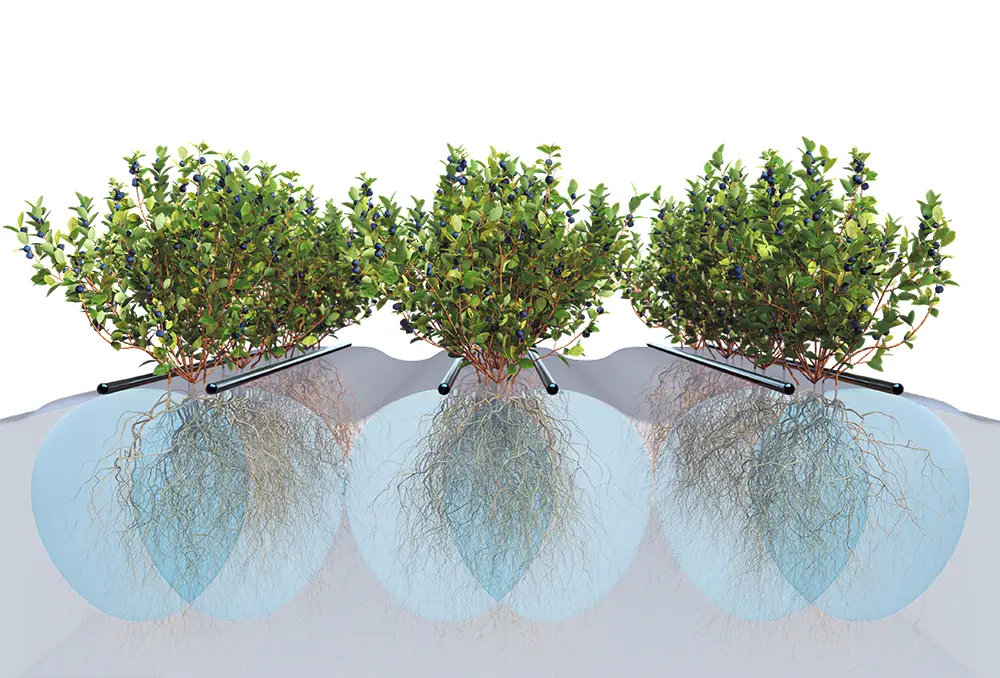
Blueberries are particularly sensitive to both waterlogging and water stress. Their root-zone conditions must be managed carefully, especially in containers, growbags and other systems with limited buffering capacity. Metzer’s crop guidance emphasizes precise drip and pulse irrigation, uniform distribution and root-zone monitoring for blueberry production.
Water Waste and Higher Operating Costs
Over-irrigation has direct financial consequences.
Applying water beyond crop demand can increase:
- Pumping and energy expenses
- Fertilizer losses
- Drainage requirements
- Disease-management costs
- Labor spent diagnosing and correcting problems
- The risk of lower yield or quality
The cost is not limited to one irrigation event. If an incorrect schedule is repeated across a large field or throughout a growing season, small daily losses can become a significant operational expense.
Efficient irrigation management helps conserve water and energy, improve crop performance and reduce nutrient leaching.
Examples of Over-Irrigation in Different Crops
Different crops respond to excess water in different ways. Their sensitivity is influenced by root structure, soil or substrate, water quality and production system.
| Crop | Principal risk | Management priority |
| Avocado | Poor aeration, weakened roots and root rot | Maintain drainage and a balanced water-air relationship within the root zone |
| Citrus | Salinity stress, root-zone decline and uneven fruit performance | Monitor water quality, drainage and distribution uniformity |
| Blueberries | Waterlogging, pH or EC imbalance and rapid root stress | Use precise pulse irrigation and continuous root-zone monitoring |
| Strawberries | Excess drainage, nutrient loss and low root-zone oxygen in substrate | Apply measured irrigation pulses according to substrate capacity and crop demand |
Strawberries require consistent moisture, precise fertigation and adequate aeration. Metzer positions its Inbar ClusterDrip RG-X and related pulse-irrigation solutions for both soil-based and soilless strawberry production.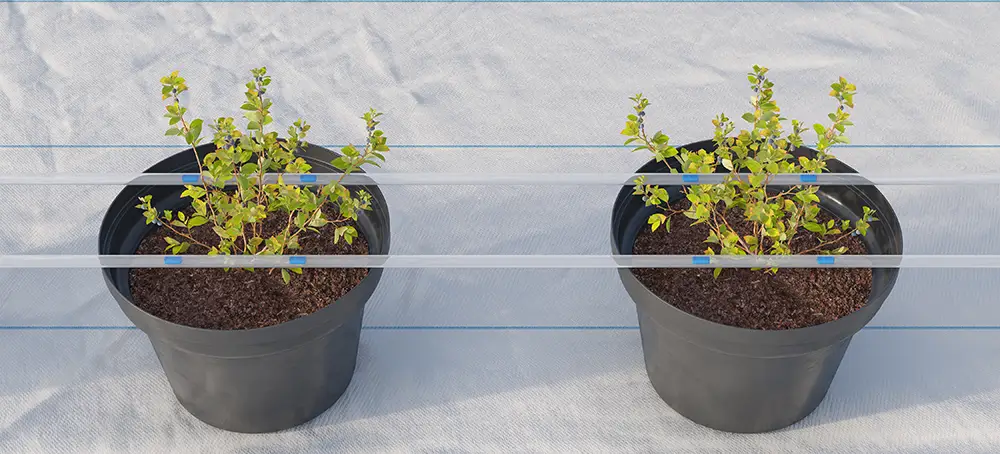
What to Do After Over-Irrigating a Field
When over-irrigation is suspected, the priority is to prevent further saturation while identifying the extent and cause of the problem.
- Reduce or stop irrigation temporarily. Avoid adding more water before the root zone has been assessed.
- Measure moisture at several depths. Determine whether the problem is limited to the surface or extends below the active roots.
- Inspect multiple field locations. Compare high and low areas, different soil types and the beginning and end of irrigation laterals.
- Check drainage and standing water. Look for compaction, blocked drainage routes and areas where the water table may be shallow.
- Examine roots and crop symptoms. Check for discoloration, soft tissue, poor root development and disease.
- Test salinity or nutrient levels where necessary. Soil, water or drainage testing may be required if salt accumulation or nutrient leaching is suspected.
- Inspect the irrigation system. Confirm controller settings, valve operation, pressure, flow and emitter discharge.
- Correct the schedule or system design. Adjust irrigation duration, frequency, pressure, zoning or emitter selection.
- Resume irrigation according to measured conditions. There is no universal waiting period; the correct timing depends on the crop, soil, weather and drainage.
Severe salinity, waterlogging or root disease may require support from an agronomist, irrigation designer or soil specialist.
How Precision Drip Irrigation Helps Prevent Over-Irrigation
Drip irrigation provides a high level of control, but it does not automatically prevent overwatering.
A drip system can still apply too much water if the irrigation duration, frequency, emitter flow or spacing is incorrect. Precision depends on the combination of sound design, accurate scheduling, reliable equipment and continuous monitoring.
Match Irrigation to Crop and Root-Zone Conditions
Preventing over-irrigation begins with adjusting irrigation duration and frequency to the crop’s growth stage, rooting depth, weather, rainfall, and soil or substrate conditions. Root-zone moisture should be checked at representative locations and depths, since the soil surface alone may not reflect the amount of water available to the roots. Combining field observations with suitable monitoring tools helps growers determine when irrigation is needed and whether the applied water remains within the active root zone.
Improve Pressure, Flow and Distribution Uniformity
A precision irrigation system should apply water as uniformly as possible throughout each zone.
Design considerations include:
- Dripper flow rate
- Dripper spacing
- Lateral length and diameter
- Operating pressure
- Elevation changes
- Soil infiltration rate
- Filtration and flushing
- Crop spacing
- Topography
Pressure-compensated drippers help maintain more consistent discharge where laterals are long or terrain varies. Metzer’s flat PC dripline range is designed to support uniform water distribution across challenging topographies and changing pressure conditions.
IrriMetzer supports hydraulic planning through calculations related to flow, pressure, pipe sizing, velocity, head loss and lateral design. Accurate hydraulic calculations help ensure that the system selected for the field can deliver the intended irrigation volume uniformly.
Use Pulse Irrigation for Sensitive and Soilless Crops
Pulse irrigation divides the daily irrigation requirement into short, controlled applications.
When properly scheduled, it can help maintain a narrower root-zone moisture range and distribute water and nutrients more evenly in growbags, pots and substrates with limited buffering capacity.
Pulse irrigation does not eliminate the risk of overwatering. The total daily volume, pulse duration and frequency must still reflect crop demand, substrate characteristics, drainage and climate.
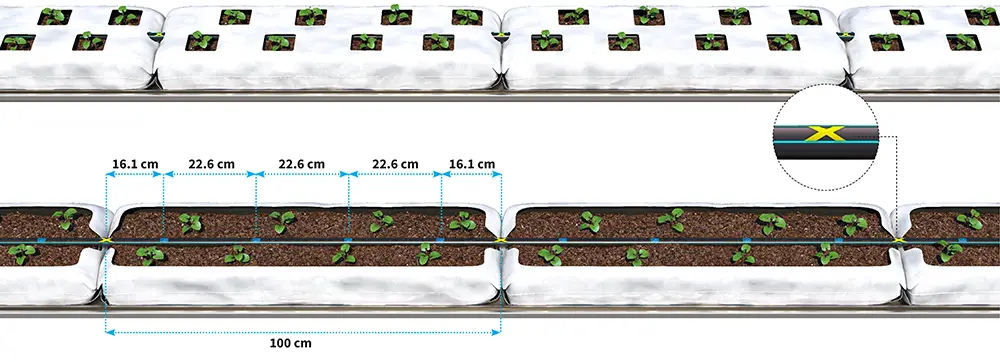
Metzer’s INBAR is a compact, pressure-compensated, non-drain dripper designed for precise irrigation intervals. Its anti-drain mechanism keeps the dripline full between cycles, enabling irrigation to begin immediately and simultaneously at the next pulse.
For greenhouse and growbag production, InbarRGX combines clustered drippers with a layout designed to position water accurately within the growing container. It is intended for low-flow pulse irrigation in crops such as strawberries and tomatoes.
Consider Subsurface Drip Irrigation for Permanent Crops
Subsurface drip irrigation places the dripline below the soil surface and delivers water within or near the active root zone.
When correctly designed and managed, SDI can reduce unnecessary surface wetting, evaporation and runoff. It can be particularly effective for permanent crops and long-term installations, but system performance depends on burial depth, emitter spacing, soil conditions, flow rate, filtration, flushing and root management.
Metzer’s Assif is an integral, pressure-compensated, anti-siphon dripper designed specifically for SDI. Its anti-siphon mechanism helps prevent soil and sand from being drawn into the emitter when the system shuts down.
RootGuard® Band supports long-term SDI reliability by helping prevent root intrusion into buried emitters. Its function is to protect the dripper and maintain uninterrupted operation; irrigation volume must still be controlled through accurate scheduling and system management.
Use Automation and Field Zoning
Agricultural fields are rarely uniform. Soil, slope, drainage, crop development and exposure may vary significantly within the same project.
Dividing the system into appropriate zones allows irrigation to be adjusted according to the needs of each area. Automation can support:
- Irrigation start and stop times
- Valve sequencing
- Pulse frequency
- Fertigation cycles
- Filter flushing
- Flow and pressure alerts
- Sensor-based irrigation triggers
Automation improves consistency, but an incorrect program can repeat the same mistake across every cycle. Controller settings should therefore be reviewed against weather, crop development and field measurements.
Maintain the Irrigation System
Poor maintenance can create both over-irrigated and under-irrigated areas.
Regularly inspect:
- Filters
- Valves
- Pressure regulators
- Flow meters
- Controllers
- Driplines
- Connections
- Flush points
- Emitters
- Sensors
Unexpected increases in system flow may indicate a leak. Lower flow may indicate clogging, pressure loss or a valve problem. Comparing measured performance with the design flow can reveal faults before crop symptoms become severe.